
The President Who Refused to Live Above His People
José “Pepe” Mujica and the Power of Proximity
José Mujica’s modest lifestyle invites a closer look at Connected Leadership, the Reality Gap, and why proximity requires more than personal simplicity.
By Legacy Sustained · Published
What happens when someone gains enormous power but refuses to let it separate them from ordinary people?
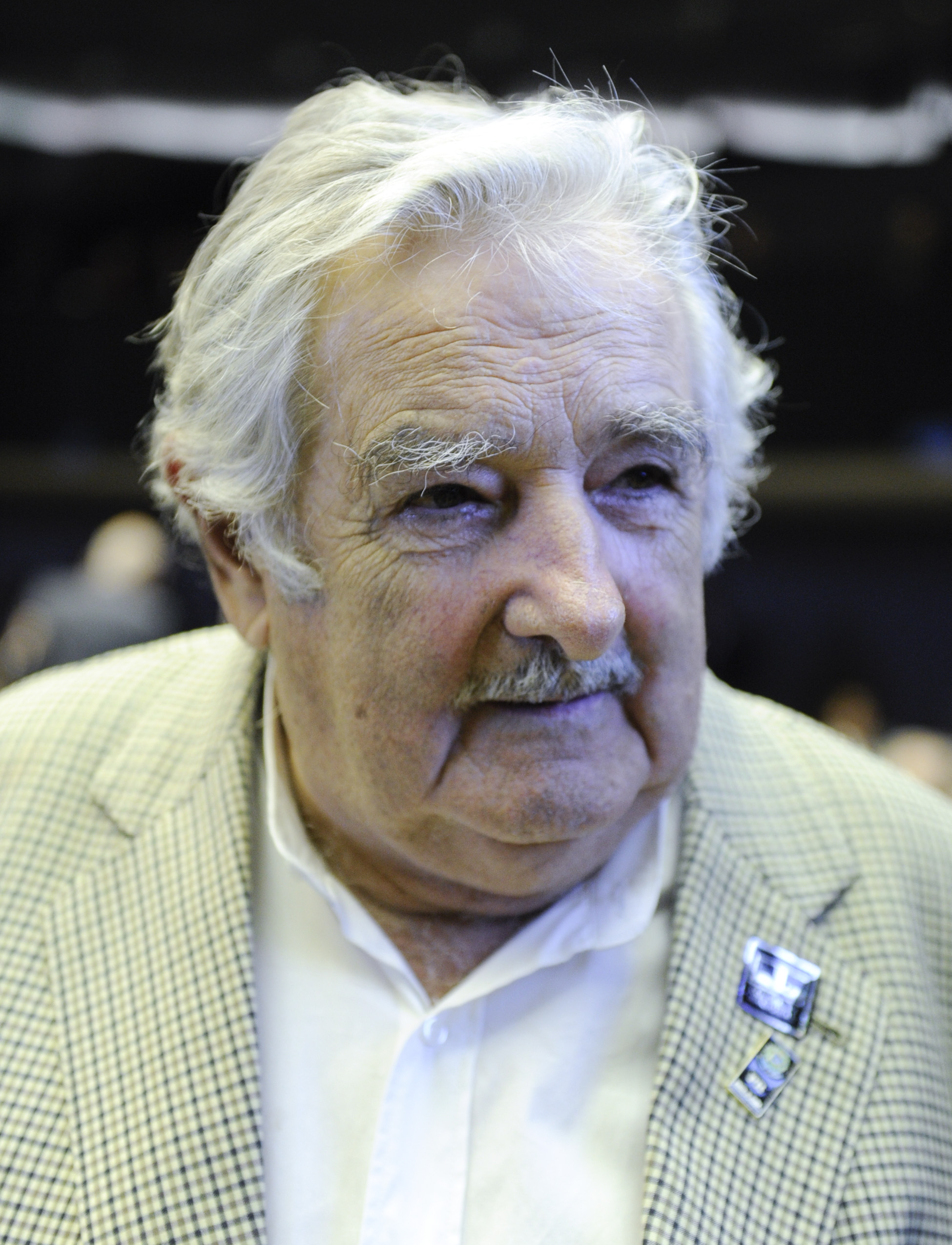

José “Pepe” Mujica, president of Uruguay from 2010 to 2015, offered an unusual answer.
While leading a nation, he continued living with his wife on their modest farm outside Montevideo. He drove an aging Volkswagen Beetle rather than adopting the trappings of presidential luxury. He donated approximately 90% of his presidential salary.
The international press called him the world's poorest president.
But perhaps the most interesting thing about Mujica wasn't how little he owned. It was how little he allowed his position to change his relationship with everyday life.
A Different Picture of Leadership
We often associate leadership with elevation.
The corner office. The executive floor. The larger home. The exclusive meetings. The people who manage access to the person in charge.
Some of these arrangements serve legitimate purposes. Leadership carries responsibilities that require time, protection, and focused attention.
But there is a danger.
As leaders gain authority, they can gradually lose proximity to the people whose lives are affected by their decisions.
Information becomes filtered. Disagreement becomes less comfortable. Ordinary struggles become increasingly abstract.
At Legacy Sustained, we call the distance between what leaders believe is happening and what people actually experience the Reality Gap.
Mujica's life offers an opportunity to examine how a leader might resist that separation.
An Ancient Parallel: King Benjamin
There is an ancient story about a king named Benjamin who understood leadership differently.
Rather than seeing his position as an entitlement to privilege, King Benjamin described working with his own hands and serving alongside his people. He believed that his responsibilities as king did not place him above those he governed.
His authority did not make him a different kind of person.
It's a remarkably relevant idea, even today: A position of authority does not make its holder more human, more valuable, or less accountable than anyone else.
Mujica and King Benjamin lived in profoundly different circumstances. Yet both offer a striking challenge to the assumption that leadership should create distance between those who govern and those who are governed.
Leadership That Stays Connected
What makes Mujica's example interesting isn't simply that he lived modestly. It's that he continued to live in a way that kept him connected to ordinary human experiences.
He understood something that leaders can easily forget: the people affected by our decisions aren't abstractions, statistics, or obstacles to overcome. They're human beings whose lives are every bit as real and important as our own.
And the greater our authority, the greater our responsibility to remember that.
For organizations, this has practical implications.
A leader who rarely interacts with frontline employees may believe processes are working beautifully while those employees struggle every day to make them work.
An executive who sees only polished reports may never discover the frustrations customers experience.
A public official surrounded by advisors and security may gradually lose touch with the everyday realities of the people they represent.
None of these leaders necessarily intends to become disconnected. Often, the separation happens gradually as organizations grow and responsibilities increase.
That's why proximity must be more than a personal preference. It needs to become part of how leadership operates.
Proximity Is More Than Modesty
Living simply does not automatically make someone a good leader.
A leader can live in a small house and still refuse to listen. Another can occupy a large office and remain genuinely connected to employees, customers, and communities.
The real question is not how much a leader owns.
It is whether authority has insulated that leader from reality.
Healthy proximity requires more than symbolic gestures. It requires listening to people who experience the consequences of decisions, welcoming uncomfortable information, and protecting their ability to question authority.
It also requires systems that make those connections sustainable rather than dependent on one leader's personality.
Mujica's personal choices made his rejection of status visible. They do not, by themselves, establish how effectively every institution under his leadership listened or responded.
That distinction is important.
What Can We Learn?
Mujica died on May 13, 2025, at age 89. His passing prompted national mourning in Uruguay and tributes far beyond its borders.
His life leaves us with questions worth asking in businesses, families, communities, and governments.
- Does my position give me a clearer understanding of people's experiences, or does it shield me from them?
- Can people tell me something I don't want to hear without fearing consequences?
- Do the privileges of my role serve the work, or have they become rewards I feel entitled to?
- What have I changed my mind about because I listened to someone whose experience differed from mine?
- If I stepped away from my title tomorrow, what relationships, trust, and capabilities would remain?
Leadership is not measured by how far above others we rise, but by how responsibly we use the authority entrusted to us.
King Benjamin provides one ancient expression of that principle. José Mujica offers a modern life through which we can examine it.
Neither removes the need for accountability, evidence, or discernment.
Both invite us to imagine leadership that remains connected to our shared humanity.
And that is a legacy worth sustaining.
Legacy Sustained — The Human Side of Sustainable Success
Sources and references
- Uruguay, Decree 104/025 (May 13, 2025) — Primary source for the presidency dates, death date and official national mourning.
- Presidencia Uruguay: El Presidente Mujica fue censado en la primera jornada — Contemporary official account of his farm residence.
- Presidencia Uruguay: Mujica and his 1987 Volkswagen (November 14, 2014) — Contemporary official reporting on his car.
- The Guardian: José “Pepe” Mujica obituary (May 14, 2025) — Reports the approximately 90% salary donation and the press nickname; the nickname is not an audited wealth ranking.
- Reuters: José Mujica obituary (May 13, 2025), republished by Investing.com — Reports his age, home life and international tributes.
- Book of Mormon, Mosiah 2:10–14 and 26 — Source of the King Benjamin story and his account of service. Used here as a leadership parallel.